What If Tanzania Became Communist?
Updated: Oct 12
Why Ask Such an Unlikely Question?
As I write this in March 2026, the world has already witnessed events that would have seemed impossible just months earlier. Within the span of two months, the United States launched a war against Venezuela and captured its president. It then engaged militarily with Iran, killing key leaders and plunging the Middle East into another major conflict.
History repeatedly reminds us that the “impossible” often happens faster than we expect. As a behavioral marketer, banker, and scholar, I’ve trained myself to challenge what Joe Sugarman calls “assumed constraints.” Assumed constraints are the invisible rules we believe govern reality—but which often exist only in our minds.
So I ask uncomfortable questions. Like this one: What happens to marketers if Tanzania suddenly becomes communist?
The Immediate Assumption: Marketing Would Die
For those who lived through socialist or communist systems, the answer seems obvious. Marketing would become useless. After all, communism traditionally rejects:
open markets
private ownership
branding
luxury goods
wealth accumulation
In theory, if the state controls production and distribution, there is no need for marketing. Marketing thrives where consumer choice exists. And consumerism and communism have historically been bitter enemies. Or so I thought.
The Luxury Paradox Under Communism
While researching for my book, I immersed myself in the world of luxury marketing—particularly the work of Jean-Noël Kapferer and Vincent Bastien in The Luxury Strategy. There I encountered a fascinating phenomenon called the “ratchet effect” (or non-return effect). Once people experience luxury, it becomes extremely difficult for them to abandon it—even when their income falls.
For example, a consumer might downgrade from a Chevrolet to a smaller Ford during hard times. But someone who owns a Ferrari may refuse to sell it—even if it means leaving it in the garage and riding a bicycle instead. Luxury, once tasted, becomes psychologically irreversible.
Kapferer and Bastien illustrate this with a remarkable story from communist China in the 1980s. At the time, the People’s Republic of China was a major customer of Saint-Gobain Desjonquères, purchasing glass bottles for:
antibiotics
nail varnish
When the Chinese economy began deteriorating, the company’s leadership assumed the obvious: Healthcare would be prioritized. Beauty products would be cut. So they maintained antibiotic bottle forecasts but drastically reduced projections for nail varnish bottles. They were completely wrong.
Demand for nail varnish bottles surged. Why? Chinese leaders understood something profound about human psychology. After decades of grey, uniform communist life, nail varnish had become a symbol of freedom and colour. Maintaining its availability signalled that everything was normal. Removing it could have created dissatisfaction far more dangerous than a shortage of antibiotics.
In other words: Even in a communist system, symbols matter. And managing symbols is the essence of marketing.
Branding: Even Communism Eventually Needed It
Communist ideology traditionally rejected branding, viewing it as capitalist propaganda. But reality forced governments to reconsider. Rory Sutherland explains this in Alchemy. In many Eastern Bloc countries, products were deliberately unbranded. Bread was simply labelled “bread.”
Customers had no idea:
who made it
who to blame if it was poor quality
which producer was better
Without reputation or accountability, quality collapsed. A similar issue occurred with rivets in Soviet factories. Factories were given quotas. They produced rivets that were sent to central depots where they mixed with rivets from other factories. Because no rivet carried a factory name:
no one was accountable
quality declined dramatically
Ships literally began falling apart because rivets were poorly made. Eventually, Soviet authorities were forced to swallow their ideological pride. Factories began stamping their names on rivets. Quality improved almost immediately. Why? Because branding restored feedback loops.
Which means even communist systems eventually rediscover a fundamental marketing principle: Identity creates accountability.
The Advertising Paradox
However, branding does not necessarily mean advertising. In fact, in communist economies, advertising often had the opposite effect. Again, Rory Sutherland notes an intriguing phenomenon. When a product was advertised in communist Eastern Europe, demand sometimes decreased. Why? Because consumers assumed: “If the government is advertising this product, it must be terrible—otherwise people would already be queuing for it.”
In a system where desirable goods were always scarce, advertising became a signal of low quality rather than desirability.
What This Thought Experiment Taught Me
The deeper I study consumer behaviour, financial markets, and marketing campaigns, the more I realize how limited our knowledge actually is. We often treat current systems as permanent. But systems change. Sometimes overnight. This is why asking seemingly ridiculous questions is useful. Questions like: What would marketing look like if Tanzania suddenly became communist?
Nassim Taleb and the Danger of Assuming Stability
Nassim Taleb describes this problem brilliantly in The Black Swan. For decades, banks appeared safe and conservative. Then in the summer of 1982, large American banks lost nearly all the profits they had ever made after multiple Latin American countries defaulted simultaneously. Decades of apparent stability were erased in a single season. The lesson? Rare events can reshape entire systems. And they often arrive without warning.
The Lesson for Marketers
So if there is one takeaway from this edition of my bi-weekly newsletter, it is this: Never assume the environment you operate in today will exist tomorrow. Markets change. Political systems change. Consumer psychology changes. Marketers who cling too tightly to yesterday’s assumptions risk being caught completely unprepared.
The best marketers constantly challenge their own beliefs—even the ones that have served them well. Because in a rapidly changing world, the greatest competitive advantage is intellectual flexibility.
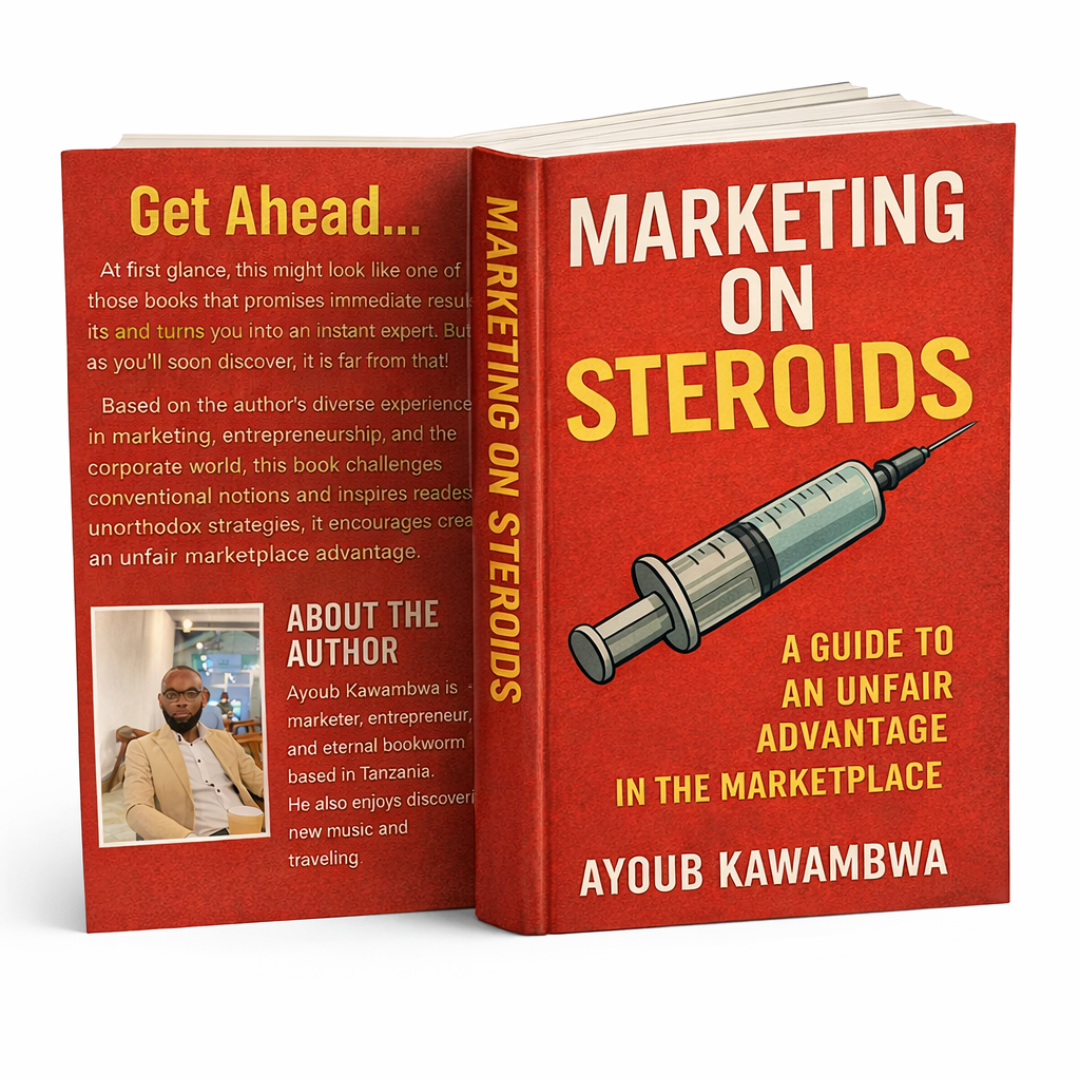
If you're interested in exploring how to challenge marketing assumptions and build unfair advantages in the marketplace, I explore these ideas extensively in my book: Marketing on Steroids: A Guide to an Unfair Advantage in the Marketplace. You can grab your copy here: https://www.marketingonsteroidsbooks.com/


Comments